
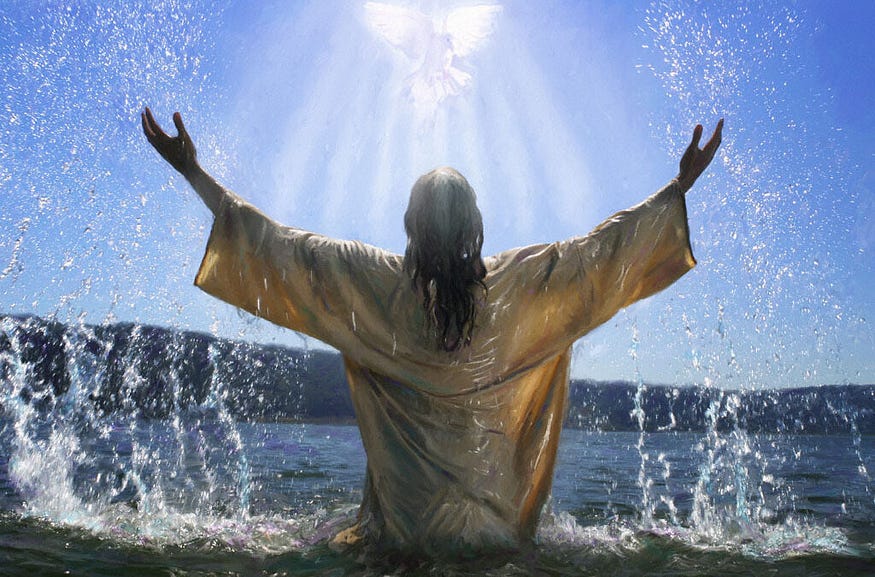
The Gospel of John gives us a very important and often overlooked detail about the earthly ministry of Jesus. It says, “Now when Jesus learned that the Pharisees had heard that Jesus was making and baptizing more disciples than John — although Jesus himself did not baptize, but only his disciples” (John 4:1–2). This statement is surprising because Jesus commanded baptism, approved baptism, and sent His disciples to baptize the nations, yet He Himself did not personally baptize anyone with water. This was not because water baptism was meaningless. It was not because baptism had no place in the life of discipleship. It was not because Jesus rejected the baptism ministry of John or the baptism ministry later carried out by the apostles. Rather, the Holy Spirit records this detail to show us the wisdom, purpose, and priority of Christ’s mission. Jesus came not merely to perform outward religious rites, but to accomplish inward redemption, to cleanse consciences, forgive sins, and give the Holy Spirit. He came not to create a group of people who boasted in being personally baptized by Him, but to create one body redeemed by His blood. He came not to make water the center of salvation, but to make Himself the center of salvation. The New Covenant is not built upon human ceremony, but upon the death, resurrection, ascension, and Spirit-giving ministry of Jesus Christ. This message calls us to understand baptism rightly, honor it obediently, but never replace Christ with the rite.
Jesus Did Not Baptize Personally to Prevent Misunderstanding of Salvation
The first reason Jesus did not personally baptize anyone with water is that salvation should never be misunderstood as depending on the outward act itself. The Scripture says, “Although Jesus himself did not baptize, but only his disciples” (John 4:2). Paul later wrote, “Christ did not send me to baptize but to preach the gospel, and not with words of eloquent wisdom, lest the cross of Christ be emptied of its power” (1 Corinthians 1:17). Again he declared, “For by grace you have been saved through faith. And this is not your own doing; it is the gift of God, not a result of works, so that no one may boast” (Ephesians 2:8–9). Peter also said that baptism saves “not as a removal of dirt from the body but as an appeal to God for a good conscience, through the resurrection of Jesus Christ” (1 Peter 3:21). These verses teach us that baptism has meaning only because of Christ, not apart from Christ. Water does not save by itself. A ceremony does not redeem by itself. A religious action does not remove sin by itself. Salvation comes through the grace of God, the blood of Christ, the resurrection of Christ, and faith in Christ. If Jesus had personally baptized multitudes, many might have been tempted to place their confidence in the historical moment of being touched by Him in water rather than in His cross. They might have said, “I am saved because Jesus Himself baptized me.” They might have trusted the act more than the Savior. They might have remembered the water more than the blood. They might have treasured the ceremony more than repentance, faith, and new birth.
This is why the New Covenant must always place Christ above every outward sign. Baptism is holy because Christ commanded it, but baptism is not a substitute for Christ. The Lord’s Supper is holy because Christ instituted it, but the bread and cup are not a substitute for personal faith and obedience. Church attendance is good, but it cannot replace being born again. Ministry service is valuable, but it cannot replace a cleansed heart. Jesus did not personally baptize people with water because He did not want anyone to confuse the symbol with the substance. The water points to cleansing, but His blood provides cleansing. The immersion points to death and resurrection, but His death and resurrection accomplish salvation. The public act points to discipleship, but the inward work of grace makes a person a new creation. Paul said, “I have been crucified with Christ. It is no longer I who live, but Christ who lives in me” (Galatians 2:20). That is the heart of salvation. It is not merely that a person went into water. It is that the old life was judged at the cross, the sinner was united to Christ, and the life of Christ now rules within. Therefore, baptism must be preached, practiced, and honored, but it must never be a replacement for the gospel.
Jesus Came to Bring the Greater Baptism of the Holy Spirit
John the Baptist clearly showed the difference between his ministry and the ministry of Christ. He said, “I baptize you with water for repentance, but he who is coming after me is mightier than I… He will baptize you with the Holy Spirit and fire” (Matthew 3:11). Mark records the same truth: “I have baptized you with water, but he will baptize you with the Holy Spirit” (Mark 1:8). Jesus Himself later said, “John baptized with water, but you will be baptized with the Holy Spirit not many days from now” (Acts 1:5). On the day of Pentecost, this promise was fulfilled when “they were all filled with the Holy Spirit” (Acts 2:4). These verses reveal the primary purpose of Jesus. He came as the giver of the Spirit. He came to create a Spirit-filled people. He came to write God’s law upon the heart. He came to make believers the temple of the Holy Spirit. He came to bring not only forgiveness from past guilt, but power for present holiness. John’s baptism was a preparation, but Christ’s baptism is transformation. John’s water pointed forward, but Christ’s Spirit brings the promise into reality. John could call men to repentance, but Jesus gives the Spirit who produces repentance. John could immerse the body in the Jordan, but Jesus immerses the believer into the life and power of God. John could announce the kingdom, but Jesus brings the kingdom within His people by the Holy Spirit.
This is the glory of the New Covenant. God promised through the prophets, “I will give you a new heart, and a new spirit I will put within you… And I will put my Spirit within you, and cause you to walk in my statutes” (Ezekiel 36:26–27). Jeremiah also declared, “I will put my law within them, and I will write it on their hearts” (Jeremiah 31:33). Jesus came to fulfill these promises. He did not merely come to add another religious ceremonies. He came to bring a new heart, a new spirit, a new creation, and a new life. This is why His ministry cannot be reduced to water. Water baptism is the outward sign, but Spirit baptism is the inward reality. Water touches the skin, but the Spirit touches the soul. Water can be administered by a disciple, but only Jesus can give the Holy Spirit. Water can be seen by men, but the Spirit produces unseen transformation that later becomes visible in holy living. A person may be wet with water and still dry in the soul. But when Jesus baptizes a person with the Holy Spirit, the heart is made alive, the conscience is awakened, the will is surrendered, and the life begins to bear witness that Christ is Lord.
Jesus Delegated Baptism to His Disciples to Prepare Them for Ministry
The Gospel says that Jesus was making disciples, yet “Jesus himself did not baptize, but only his disciples” (John 4:1–2). This means Jesus allowed His disciples to participate in His work even before they fully understood everything. Later, after His resurrection, He commanded them, “Go therefore and make disciples of all nations, baptizing them in the name of the Father and of the Son and of the Holy Spirit” (Matthew 28:19). Mark records the mission this way: “Go into all the world and proclaim the gospel to the whole creation” (Mark 16:15). Jesus also said, “As the Father has sent me, even so I am sending you” (John 20:21). These verses show that the ministry of Christ was never meant to end with His physical presence on earth. He trained disciples so that they would continue His work after His ascension. He preached, healed, taught, delivered, and discipled, but He also involved His followers in the work. He sent the twelve. He sent the seventy-two. He taught them to pray, preach, serve, and depend on God. By allowing them to baptize, He was teaching them that ministry in the kingdom is not a performance by one earthly figure alone, but the shared service of a redeemed community under His authority.
This delegation is very important for the church today. Many believers want Jesus to do everything directly while they remain passive spectators. But the pattern of the New Covenant is that Christ works through His body. Paul said, “Now you are the body of Christ and individually members of it” (1 Corinthians 12:27). Peter wrote, “As each has received a gift, use it to serve one another, as good stewards of God’s varied grace” (1 Peter 4:10). Jesus did not personally baptize with water because He was preparing His disciples to carry responsibility. He was teaching them that ministry must be entrusted, multiplied, and continued. The church is not built by one man doing everything. The church is built as Christ gives gifts, raises servants, and sends witnesses. The disciples who baptized during Jesus’ earthly ministry would later preach at Pentecost, plant churches, appoint elders, suffer persecution, and carry the gospel beyond Jerusalem. Their early participation was training for future responsibility. This also teaches us that no servant should think the ministry belongs to him. The disciples baptized, but the disciples were not the source of salvation. Pastors baptize, but pastors are not the Savior. Evangelists preach, but evangelists are not the Redeemer. Teachers instruct, but teachers are not the Lord. All ministry is delegated ministry. All authority belongs to Jesus. All fruit comes from God. All glory returns to Christ.
Jesus Did Not Baptize Personally to Prevent Division and Sectarian Pride
Another important reason Jesus did not personally baptize anyone was to prevent pride, comparison, and division among His followers. Paul faced this exact problem in the Corinthian church. He wrote, “Each one of you says, ‘I follow Paul,’ or ‘I follow Apollos,’ or ‘I follow Cephas,’ or ‘I follow Christ.’ Is Christ divided? Was Paul crucified for you? Or were you baptized in the name of Paul?” (1 Corinthians 1:12–13). Paul then said, “I thank God that I baptized none of you except Crispus and Gaius, so that no one may say that you were baptized in my name” (1 Corinthians 1:14–15). These verses reveal how easily human beings turn spiritual blessings into badges of superiority. The Corinthians were dividing themselves according to personalities, teachers, and ministry associations. Some were boasting in Paul. Some were boasting in Apollos. Some were boasting in Peter. Some were even using the name of Christ in a divisive spirit. Paul rejected this completely. He reminded them that no minister was crucified for them. No minister owned them. No minister’s name was the foundation of their salvation. They were baptized into Christ, not into the reputation of the person who performed the baptism. If this kind of pride happened around Paul, Apollos, and Peter, how much more could it have happened if some people were personally baptized by Jesus Himself?
No believer is saved by a higher quality of water. No believer is more redeemed because of the earthly status of the person who baptized him. No believer can boast in the minister, the location, the river, the church building, or the ceremony. The only boast of the Christian is the cross. Paul said, “Far be it from me to boast except in the cross of our Lord Jesus Christ” (Galatians 6:14). This is the spirit of the New Covenant. We do not gather around human names. We gather around Jesus. We do not divide around ceremonies. We unite around the gospel. We do not build spiritual pride from religious experiences. We humble ourselves before the grace of God. Jesus did not personally baptize with water because He knew the human heart. He knew how quickly men create ranks, titles, factions, and claims of superiority. Therefore, He kept baptism in its proper place and kept Himself as the only foundation of the church.
Jesus’ Mission Was to Preach, Redeem, Die, Rise, and Give Life
Jesus said, “I must preach the good news of the kingdom of God to the other towns as well; for I was sent for this purpose” (Luke 4:43). He also said, “The Son of Man came to seek and to save the lost” (Luke 19:10). Again He declared, “The Son of Man came not to be served but to serve, and to give his life as a ransom for many” (Mark 10:45). Paul summarized the gospel by saying, “Christ died for our sins in accordance with the Scriptures, that he was buried, that he was raised on the third day” (1 Corinthians 15:3–4). These verses show that Jesus’ central mission was not the performance of religious rites, but the accomplishment of salvation. He came to reveal the Father. He came to preach the kingdom. He came to fulfill the law. He came to destroy the works of the devil. He came to bear sin. He came to die as the Lamb of God. He came to rise as the firstfruits of a new creation. He came to ascend and pour out the Holy Spirit. He came to make peace between God and man. He came to bring eternal life. Water baptism points to these realities, but it does not create them by itself. Jesus had to go to the cross. Jesus had to shed His blood. Jesus had to enter death and conquer it. Jesus had to rise from the grave. Jesus had to sit at the right hand of the Father. Without these works, baptism would be an empty sign. Without the cross, water cannot cleanse sin. Without the resurrection, immersion cannot symbolize new life. Without the Spirit, the ceremony cannot produce transformation.
When baptism is joined to Christ, it becomes a beautiful declaration that the believer has died to sin and risen to walk in newness of life. Paul wrote, “We were buried therefore with him by baptism into death, in order that, just as Christ was raised from the dead… we too might walk in newness of life” (Romans 6:4). This is the proper meaning of baptism. It points backward to Christ’s death and resurrection. It points inward to the believer’s union with Christ. It points forward to a life of obedience. Jesus did not personally baptize with water because His mission was not merely to symbolize redemption, but to accomplish redemption.
Water Baptism Remains Important, But Christ Must Remain Supreme
Although Jesus did not personally baptize anyone with water, the New Testament does not teach that baptism is unimportant. After His resurrection, Jesus commanded His disciples to make disciples and baptize them “in the name of the Father and of the Son and of the Holy Spirit” (Matthew 28:19). On the day of Pentecost, Peter said, “Repent and be baptized every one of you in the name of Jesus Christ for the forgiveness of your sins” (Acts 2:38). When the Ethiopian eunuch believed the gospel, he asked, “See, here is water! What prevents me from being baptized?” and Philip baptized him (Acts 8:36–38). Paul wrote that believers are buried with Christ in baptism and raised with Him through faith (Colossians 2:12). These verses show that baptism is part of obedient discipleship. It is a public confession. It is a visible testimony. It is a declaration that the believer belongs to Jesus. It identifies a person with the death, burial, and resurrection of Christ. It shows that the old life is being left behind and a new life has begun. Therefore, the fact that Jesus did not personally baptize anyone should not be used to despise baptism. We must not go beyond Scripture in either direction. We must not make baptism a substitute for salvation, but we must not treat baptism as meaningless. The New Covenant calls believers to faith, repentance, confession, obedience, and public identification with Christ.
Conclusion: The One Who Did Not Baptize with Water Baptizes with the Spirit
Jesus did not personally baptize anyone with water, yet He is the greatest Baptizer. He preached the kingdom, bore our sins, died our death, rose for our justification, ascended to the Father, and poured out the Holy Spirit. His disciples baptized with water, but Jesus baptizes with the Holy Spirit. This is why every believer must look beyond the water to the Lord of the water. We must not ask only, “Have I been baptized?” We must also ask, “Have I truly believed in Christ? Have I repented of sin? Have I received the Holy Spirit? Am I walking in newness of life? Is Christ being formed in me?”