
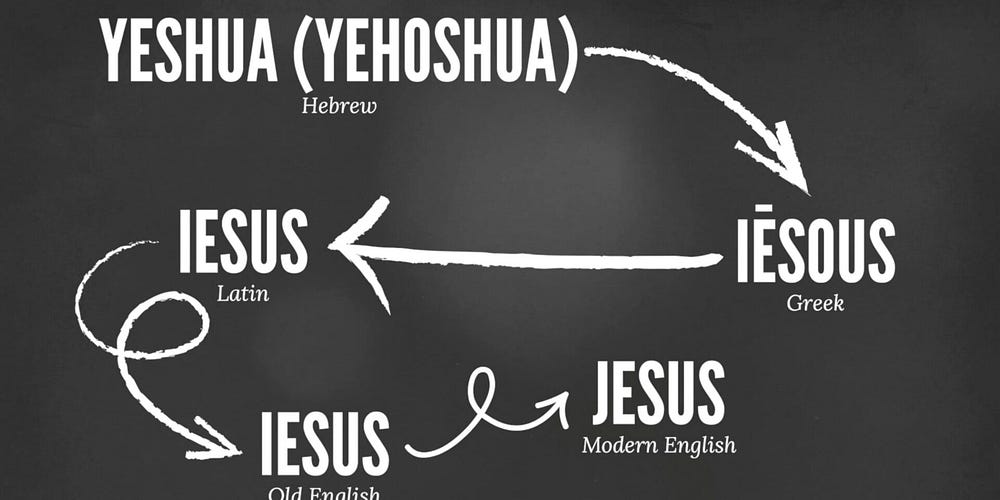
There are moments in Scripture where God places a truth so openly in front of us that we can pass over it too quickly. One of those moments is found in a name.
That is not just a sequence of history — it is a revelation of God’s pattern.
Moses is the great deliverer and lawgiver; John is the last great prophet who prepares the way. Moses and John both stand at the edge of a new season, and both point beyond themselves. Moses points to a greater Prophet (Deut. 18:15), and John points to the Lamb of God (John 1:29). Then, in God’s timing, Yehoshua leads (physical) Israel into the promised (physical) land, and Yeshua leads believers (spiritual Israel) into the true (spiritual) inheritance.
Even more striking: the name Yehoshua / Yeshua carries the meaning “Yahweh saves” or “The LORD is salvation.” The name itself preaches.
The Pattern of Transition: After Moses, After John
Yehoshua after Moses
Moses brought Israel out of Egypt, but Moses did not bring them into the inheritance of Canaan. He could lead them out, but he could not lead them in. The law could expose sin, restrain sin, define sin — but it could not fully conquer the human heart.
God told Moses plainly: “You shall see the land before you, but you shall not go there” (Deut. 32:52). Then the baton passed to Yehoshua: “Be strong and courageous… you shall cause this people to inherit the land” (Josh. 1:6).
Yeshua after John
John the Baptist stands like Elijah at the end of the Old Covenant era, calling people to repentance, preparing them for the Messiah: “Prepare the way of the Lord” (Matt. 3:3). John can point, preach, and prepare — but he cannot redeem. He is the friend of the Bridegroom, not the Bridegroom (John 3:29).
Then Jesus appears, and John declares: “He must increase, but I must decrease” (John 3:30).
Moses and John are mighty, but both are forerunners. God uses them to bring the people to the edge of promise — then God raises up Yehoshua / Yeshua to bring the people through.
One Name That Preaches: “The LORD Saves”
In Matthew 1:21 the angel says: “You shall call His name Jesus, for He will save His people from their sins.” The name fits the mission.
Joshua’s name also fits his mission: he is God’s appointed leader to bring Israel into God’s promised land. The name “Yehoshua” declares salvation belongs to Yahweh; Joshua is the instrument, but God is the Savior.
So both names testify to the same truth:
- God is the Deliverer
- God is the Warrior
- God is the One who gives inheritance
Joshua shows it in history; Jesus fulfills it in eternity.
Both Were Sent by God to Bring People Out of Bondage
Physical bondage vs spiritual bondage
Joshua’s story begins after a mighty deliverance from Egypt. Egypt represents slavery, oppression, and a life defined by taskmasters. God says, “I have come down to deliver them” (Ex. 3:8). Israel’s chains were physical, their slavery visible.
But Jesus comes to deal with a bondage deeper than Pharaoh. Sin is a harsher master than Egypt. Pharaoh enslaves the body; sin enslaves the soul. Jesus says: “Everyone who commits sin is a slave to sin” (John 8:34).
Joshua is a picture of God bringing people out of physical slavery.
Jesus is the reality of God bringing people out of spiritual slavery.
And this matters because many people want relief without redemption. They want a change of circumstances, but Jesus offers a change of nature. He does not merely improve life; He gives new life.
- Joshua leads a nation out of Egypt into Canaan.
- Jesus leads believers out of sin into salvation.
Paul describes it like this: “He has delivered us from the domain of darkness and transferred us to the kingdom of His beloved Son” (Col. 1:13).
Both Faced Enemies and War — But Jesus Fights a Greater War
Joshua fought visible enemies
Joshua fought real armies: Jericho, Ai, coalitions of kings — battles in valleys, sieges, marches, strategy. “Joshua waged war a long time with all those kings” (Josh. 11:18). The warfare was tangible; the weapons were swords, spears, shields.
Jesus fights invisible enemies
Jesus fights a war that cannot be won with steel. His enemies are deeper:
- Sin
- Death
- Satan
- The powers of darkness
Paul says, “We do not wrestle against flesh and blood, but against… the spiritual forces of evil” (Eph. 6:12).
So while Joshua’s war is a shadow, Jesus’ war is the true conflict behind all conflicts.
And notice this: Joshua’s victories were partial and progressive — one city at a time.
Jesus’ victory is decisive and final — one cross, one empty tomb.
On the cross Jesus declares, “It is finished” (John 19:30). That is not the cry of a victim; it is the declaration of a conqueror.
Colossians explains the spiritual battlefield outcome: Jesus “disarmed the rulers and authorities and put them to open shame, by triumphing over them in Him” (Col. 2:15). That is conquest language — triumph, disarming, shame, victory.
Joshua conquered Canaan’s kings.
Jesus conquered the kingdom of darkness.
Both Led a People Through Water Into Promise
Joshua and the Jordan
Israel could not enter the land without passing through the Jordan. The river stood as a barrier between wilderness wandering and promised inheritance. But God made a way: the waters were cut off, and the people passed through (Josh. 3:13–17). The priests carried the ark; God’s presence went before them. Israel crossed on dry ground.
Jesus and baptism / the new exodus
When Jesus comes, He is baptized in the Jordan (Matt. 3:13–17). He steps into the waters — not because He needs cleansing, but because He identifies with the people He came to save. Then He comes up from the water, and the Father declares His pleasure, and the Spirit descends.
Joshua leads people through water into the land.
Jesus goes through water and then leads people into the kingdom.
And for believers, baptism becomes a sign of that passage: death to the old life, rising to new life (Rom. 6:3–4). It is not the water that saves — but the Savior it points to.
Joshua’s Jordan crossing says: God can bring you from wandering to inheritance.
Jesus’ gospel says: God can bring you from death to life.
Both Gave Inheritance — But Jesus Gives a Better One
Joshua divided the land
After conquest, Joshua allocates and divides the inheritance: tribe by tribe, portion by portion (Josh. 13–21). The land is real, the boundaries measurable, the inheritance temporal. It is the fulfillment of a promise made to Abraham (Gen. 12:7).
Jesus grants an eternal inheritance
Jesus does not give a strip of earth in Canaan; He gives a kingdom that cannot be shaken. Peter calls it: “an inheritance that is imperishable, undefiled, and unfading, kept in heaven for you” (1 Pet. 1:4).
Jesus says, “In My Father’s house are many rooms… I go to prepare a place for you” (John 14:2). Joshua could distribute land, but Jesus prepares a dwelling in the Father’s house.
Joshua’s land could be invaded again.
Jesus’ inheritance is secure forever.
Joshua’s land had thorns.
Jesus’ promise has no curse.
Joshua’s inheritance had borders.
Jesus’ inheritance is fullness of God.
Joshua Could Bring Them Into Land, But Not Into Rest — Jesus Brings True Rest
Hebrews reflects on Israel’s story and says: “If Joshua had given them rest, God would not have spoken of another day later on” (Heb. 4:8). In other words, Joshua brought the people into Canaan, but Canaan itself was not the final “rest” God promised. There remained a greater rest — fulfilled in Christ.
Because true rest is not merely arriving at a location. True rest is reconciliation with God, peace of conscience, the end of striving to justify yourself, the end of being driven by guilt, shame, and fear.
Jesus stands and cries: “Come to Me, all who labor and are heavy laden, and I will give you rest” (Matt. 11:28).
Joshua gave partial rest in the land.
Jesus gives perfect rest in the soul.
Joshua gave a temporary settlement.
Jesus gives an eternal Sabbath.
Both Were Leaders Appointed by God — But Jesus Is the Greater Leader
Joshua is commissioned with solemn authority. God says: “As I was with Moses, so I will be with you” (Josh. 1:5). Joshua must lead, judge, instruct, and keep the people faithful.
But Joshua is still a servant. Jesus is more.
- Joshua is a leader among God’s people.
- Jesus is the King over God’s people.
Joshua is a man under God’s word: “This Book of the Law shall not depart from your mouth” (Josh. 1:8).
Jesus is the Word made flesh (John 1:14).
Joshua needs courage because battles remain.
Jesus is courage Himself because He has already overcome the world (John 16:33).
Joshua leads by obedience.
Jesus leads by both obedience and authority — He commands storms, demons, sickness, and death.
When Jesus says, “All authority in heaven and on earth has been given to Me” (Matt. 28:18), He is declaring a dominion Joshua never had.
The Conquest: Jericho and the Cross
Jericho is one of Joshua’s signature victories, and it contains a message about how God saves.
Jericho’s walls do not fall because Israel has superior weapons. They fall because God fights for His people, and the people obey His strange command — march, wait, blow the trumpet, shout (Josh. 6). The method is designed so no one can boast. God receives the glory.
That is the gospel pattern.
The cross looks like weakness, but it is power. It looks like defeat, but it is victory. It looks like shame, but it is triumph. And God designed it so no human can boast.
Paul says: “God chose what is foolish… to shame the wise” (1 Cor. 1:27). The cross is God’s “Jericho” — a victory accomplished by divine power through what looks unimpressive to human eyes.
Joshua’s victory topples walls of stone.
Jesus’ victory topples walls of separation between God and man.
Ephesians says Jesus “has broken down in His flesh the dividing wall of hostility” (Eph. 2:14). That is conquest language again — but applied to reconciliation, not geography.
Rahab and the Scarlet Sign: Mercy in the Midst of Judgment
In Joshua’s story, Rahab is a testimony that God’s mission was never only ethnic or political. Rahab, a Canaanite woman with a broken past, believes the God of Israel and is saved. She ties a scarlet cord in the window (Josh. 2:18–21), and judgment passes over her house.
Scarlet in Scripture symbolizes— blood, redemption, covering.
In Jesus, the scarlet sign becomes the blood of the covenant. “This is My blood of the covenant, which is poured out for many for the forgiveness of sins” (Matt. 26:28).
Rahab is brought into Israel and even appears in the genealogy of Jesus (Matt. 1:5). That is not accidental. It is God declaring:
- Grace was always in His plan.
- Outsiders were always welcome by faith.
- Salvation was always bigger than borders.
Joshua’s conquest included mercy for a believing outsider.
Jesus’ salvation is mercy for all believing outsiders — Jew and Gentile alike.
Spiritual Israel: From Physical People to a Global People of Faith
The New Testament reveals that God’s promise to Abraham was always aimed at a worldwide family through faith: “If you are Christ’s, then you are Abraham’s offspring, heirs according to promise” (Gal. 3:29). This does not erase Israel; it reveals how the promise reaches the nations through the Messiah.
So Jesus leads a people not defined by ethnicity or geography, but by new birth and faith. His kingdom is not a land bordered by rivers and seas; it is a reign that begins in the heart and will one day fill the earth.
Invitation: Enter the Better Promise
The wilderness is a picture of unfinished surrender. Egypt is a picture of slavery. Canaan is a picture of inheritance. And Christ is the only One who can bring you all the way through.
If you have been trying to conquer sin with human strength, you will stay tired. If you have been trying to impress God with rituals while your heart remains bound, you will stay frustrated. But if you come to Jesus — the true Yeshua, “The LORD saves” — you come to the One whose victory is permanent, eternal, and final.
He does not simply offer you a new place.
He offers you a new life.
He does not simply fight beside you.
He fights for you — and then fights in you by His Spirit.
So the call is clear:
- Come out of bondage.
- Cross through the waters.
- Follow the Captain of your salvation.
- Step into the inheritance of grace.
- Enter the rest that remains for the people of God (Heb. 4:9).
Yehoshua was a signpost.
Yeshua is the destination.
The Savior’s name was preached long before Bethlehem — because God has always been telling one story: “The LORD saves.”