
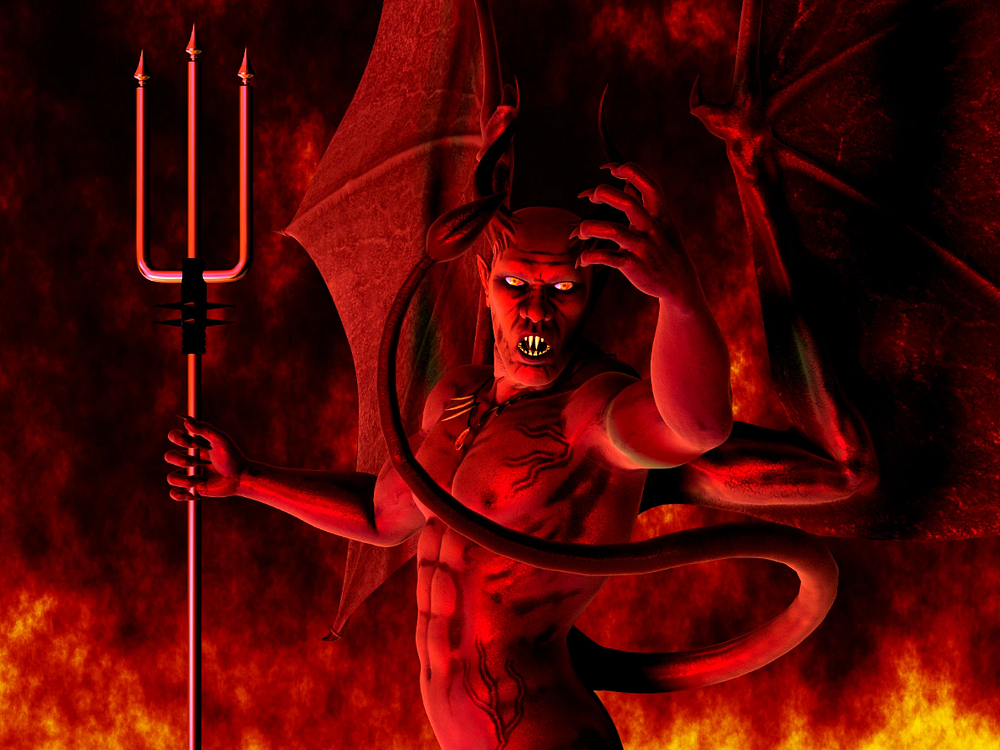
Many believers ask, “If God is all-powerful, why does He not stop Satan right now?” Others wonder, “Are human beings better than Satan, since God gives grace to man but not to fallen angels?” These are deep questions, and the answer is not that God is weak, absent, or indifferent. The answer is that God is sovereign, wise, patient, just, and redemptive in ways that surpass human understanding. Satan still exists, not because he escaped God’s rule, but because he remains under God’s sovereign permission until the appointed time of final judgment. Scripture never presents Satan as an equal opposite to God. God is Creator; Satan is only a creature. God is eternal; Satan is created. God is enthroned; Satan is already judged in principle and awaits the full execution of that judgment. The continued existence of Satan does not reveal a failure in God’s government. It reveals the unfolding of God’s perfect plan through history.
At the same time, the Bible does not teach that human beings are naturally better than Satan in the sense of moral superiority. Humanity too has rebelled. Humanity too is proud, self-seeking, disobedient, and destructive. If God had chosen to destroy every rebel at the very first moment of sin, no fallen human would survive either. The difference is not that man deserves mercy and Satan does not. The difference is that God, in His sovereign wisdom, chose to reveal His grace in Christ toward fallen humanity. This grace does not minimize His justice. Rather, it magnifies both His mercy and His righteousness through the cross. Under the New Covenant, we see that the question is not merely, “Why does Satan still exist?” The deeper question is, “Why does any sinner still breathe?” And the answer is that God is patient, giving time for repentance, while moving history toward the day when evil will be finally judged and Christ will be openly exalted over all.
Satan Still Exists Only Because God Permits It
Satan exists under God’s authority, not outside of it. Colossians 1:16–17 teaches that all things were created through Christ and for Christ, and that in Him all things hold together. That means Satan, before his fall, was also part of the created order. He is not self-existent. He is not independent. He does not possess life in himself apart from the sustaining will of God. Even in rebellion, he cannot become a rival deity. God has no equal. Satan is powerful compared to man, but nothing compared to the Lord. His movements are real, his malice is real, his temptations are real, but his freedom is limited. He can only go where he is permitted to go. He can only act within boundaries set by divine wisdom. He is on a leash he did not choose, held by a hand he cannot escape.
This truth appears clearly in Job 1:12, where Satan could not touch Job until permission was given, and even then the extent of that testing was limited by God. It also appears in Luke 22:31–32, where Jesus tells Peter that Satan demanded to sift him, yet the Lord had already interceded and set the outcome within His own redemptive purpose. This means Satan is not operating as a free sovereign. He is operating as a judged rebel whose activity is temporarily allowed within God’s larger purpose. The cross itself proves this pattern, because wicked men and demonic powers acted in hatred, yet God used their evil acts to accomplish salvation. Therefore, Satan still exists because God has not yet chosen to remove him. His continued existence is not evidence of divine weakness. It is evidence that history is still moving toward the hour God has already appointed.
God Does Not Immediately Destroy Every Rebel
Many people ask why God does not eliminate evil instantly, but that question must be turned back upon the human heart. Psalm 130:3 asks, in effect, if the Lord were to mark iniquities, who could stand? Romans 3:23 declares that all have sinned and fall short of the glory of God. That means the principle of immediate destruction would not only remove Satan, but also every fallen human being. If the measure is, “Destroy every creature that sins against God and harms others,” then humanity cannot plead for exception. Men lie, oppress, abuse, deceive, envy, hate, lust, and exalt themselves. Families are broken by sin, societies are corrupted by sin, nations are driven by sin, and even religious people often hide pride beneath spiritual language. The problem of evil is not only “out there” in Satan. It is also “in here” in the fallen human heart. The sinner who demands instant judgment on every evil being does not always realize that such a standard would condemn him as well. The fact that judgment has not yet fallen in full is not proof that sin is small. It is proof that God is patient.
2 Peter 3:9 says that the Lord is patient, not willing that any should perish but that all should come to repentance. This verse does not mean there will be no judgment. It means judgment is delayed for a redemptive reason. God allows time in history for repentance, confession, faith, and return. Under the New Covenant, this patience is seen most gloriously in the gospel of Jesus Christ. God does not instantly execute all sinners because He has made a way of reconciliation through the blood of His Son. The delay of judgment is therefore not moral indifference. It is mercy extended in the midst of a rebellious world. Yet this mercy must never be mistaken for approval. God’s patience is not permission to continue in evil. It is a summons to repent while there is still time. Satan uses delay to deepen rebellion, but God uses delay to gather His people, expose evil, vindicate truth, and glorify Christ. So when we ask why God does not destroy every rebel immediately, the answer is that the same patience that postpones final judgment on Satan also postpones final judgment on fallen humanity. Without that patience, no prodigal son would ever return, no sinner would ever be saved, and no testimony of grace would ever exist.
Human Beings Are Not Better Than Satan by Our Own Merit
Human beings are not saved because they are better than Satan. Ephesians 2:1–3 says that before salvation we were dead in trespasses and sins, walking according to the course of this world and under the influence of the prince of the power of the air. It even says that we were by nature children of wrath like the rest. Titus 3:3 adds that we ourselves were once foolish, disobedient, deceived, enslaved to passions and pleasures, living in malice and envy. These are not flattering descriptions. They reveal that fallen man is not a noble victim merely needing improvement. He is a sinner needing resurrection. He is not morally superior enough to demand grace as a right. He stands guilty before the same Holy God against whom Satan rebelled. The difference between redeemed man and condemned Satan is not that man earned compassion. The difference is that God chose to show compassion through Christ. Therefore no believer can boast as though he was naturally more worthy than an angelic rebel.
Romans 5:8 teaches that God demonstrates His love toward us in that while we were still sinners, Christ died for us. That verse destroys all human pride. Christ did not die for righteous men who had already made themselves acceptable. He died for sinners. He died for enemies. He died for those who had no claim on mercy. So the redeemed human being stands, not on a platform of superiority, but on the ground of grace alone. The believer cannot look at Satan and say, “I survived because I was better.” He must say, “I was spared because God is merciful.” Even after born-again, the flesh remains a battleground, and apart from the sustaining grace of God, a man can fall into terrible sin. This does not erase the difference between man and demon, but it does destroy human boasting. Therefore the question is not, “Am I better than Satan?” The true confession of the gospel is, “By the grace of God, I am what I am.”
Grace Is Offered to Fallen Humanity Through Christ, Not to Fallen Angels
The Bible presents a solemn distinction between the destiny of fallen angels and the redemption offered to man. Hebrews 2:16 makes the point that Christ helps the seed of Abraham, not angels. 2 Peter 2:4 says that God did not spare angels when they sinned, but committed them to chains of gloomy darkness for judgment. Jude 6 similarly speaks of angels who did not stay within their proper domain but are kept for the judgment of the great day. These verses do not answer every speculative question people may ask about angels, but they do show the direction of biblical truth. Scripture reveals no covenant of redemption for fallen angels. It reveals no angelic gospel, no angelic mediator, no angelic cross, and no call for demons to repent and be saved. The redemptive center of Scripture is Christ crucified and risen for sinners among mankind. We should not go beyond what is written, but we should not soften what is written either. Fallen angels are presented as reserved for judgment, whereas fallen humanity is presented as invited to repentance and faith through Christ.
This distinction is not unfair, because grace is never owed. Justice may be demanded by holiness, but mercy is always free. No creature can stand before God and say, “You must give me grace.” If mercy were an obligation, it would cease to be mercy. Under the New Covenant, believers do not explain grace by human worthiness but by divine love and purpose. God chose to glorify His Son by redeeming sinners from Adam’s race. In this way, the church becomes a display of grace to the powers and principalities, showing what God can do with rebels who are washed in the blood of Christ. The very existence of a redeemed people magnifies the riches of divine mercy. At the same time, the certainty of angelic judgment magnifies the seriousness of rebellion. It tells us that God does not overlook pride forever. It tells us that evil has an appointed end. It tells us that holiness is not negotiable. Therefore the privilege given to man should not lead to casualness. It should lead to trembling gratitude.
Satan’s Present Activity Serves God’s Larger Purpose Without Excusing Evil
The continued activity of Satan in the world does not mean God approves of his work. Scripture commands believers to be sober, vigilant, and resistant because the devil prowls like a roaring lion seeking whom he may devour, as 1 Peter 5:8–9 teaches. Ephesians 6:11–12 adds that our struggle is not merely against flesh and blood but against spiritual powers of darkness. These texts show that spiritual warfare is real. Temptation is real. Accusation is real. Deception is real. Yet even here, Satan’s activity becomes the occasion for believers to learn dependence, prayer, discernment, perseverance, and obedience. God never needs evil in order to be God, but in His sovereignty He is able to overrule evil so fully that even the rage of His enemies becomes part of the larger revelation of His glory. A believer learns to cling to Christ more deeply when he sees the seriousness of the battle. He learns the value of truth when he is surrounded by lies. He learns watchfulness when he knows there is an adversary. He learns the power of grace when he discovers his own weakness.
Satan meant to destroy Job, but Job came forth refined. Satan meant to sift Peter, but Peter was restored and strengthened to feed Christ’s sheep. Satan entered Judas, yet through that dark path the Lamb of God went to the cross according to the predetermined plan of God. Under the New Covenant, believers should not obsess over Satan, but neither should they deny his reality. They should resist him in faith, submit to God, and remain clothed in the armor of Christ.
The Cross Has Already Broken Satan’s Claim
One of the most important New Covenant truths is that Satan still exists, but he is already defeated in principle by the work of Christ. In John 12:31, Jesus speaks of the judgment of this world and the casting out of its ruler in connection with His approaching death. Colossians 2:14–15 says that at the cross Christ canceled the record of debt against us and disarmed rulers and authorities, triumphing over them. Hebrews 2:14 declares that through death He destroyed the one who had the power of death, that is, the devil. These verses do not mean Satan has already ceased all activity. Rather, they mean his legal hold over the people of God has been broken. His accusations lose their final force because Christ has borne the guilt of His people. His enslaving fear is shattered because Christ has conquered death. His apparent dominion is exposed because the crucified and risen Lord now reigns. The cross is not merely a personal comfort for sinners. It is a cosmic victory over the kingdom of darkness. The resurrection is heaven’s declaration that the decisive blow has already been struck.
The Final Judgment Will Remove Satan and All Unrepentant Evil
The Bible is absolutely clear that Satan’s continued existence is temporary. Matthew 25:41 speaks of the eternal fire prepared for the devil and his angels. Revelation 20:10 says that the devil will be thrown into the lake of fire and sulfur and tormented forever. This is essential to the Christian hope. Without final judgment, the wounds of history would never be answered, the martyrs would never be vindicated, the holiness of God would never be publicly displayed, and the kingdom would never come in fullness. But because God is just, Satan will not reign forever, darkness will not speak forever, violence will not wound forever, and pride will not exalt itself forever. There is a day fixed by God. There is a throne already seen by faith. There is a judgment already appointed in the counsel of heaven. The delay is real, but so is the certainty of the end.
Acts 17:30–31 says that God now commands all people everywhere to repent because He has fixed a day on which He will judge the world in righteousness by the Man He has appointed, Jesus Christ. It is not enough to ask what will happen to the devil. Each human being must ask what will happen to him if he remains outside Christ. The same Bible that announces the doom of Satan also warns every unrepentant sinner of coming judgment. Therefore, the proper response to this subject is not curiosity alone, but repentance and faith. The gospel invitation is still open now, but it will not remain open forever. God’s patience has an appointed end. His grace is gloriously extended now, but His justice will be gloriously revealed then.
Conclusion: Satan vs Human
So why does Satan still exist under God’s sovereign plan? He still exists because God has permitted for a season, without ever surrendering divine control. He still exists because history is not yet finished. He still exists because God is revealing both justice and mercy in a world where rebellion must be exposed, repentance must be offered, and Christ must be glorified as Savior, Lord, and Judge. He still exists because the final sentence, though certain, has not yet been publicly executed. He still exists because God is patient toward fallen humanity, gathering a redeemed people through the gospel. He still exists because the cross has already defeated him in principle, but the full manifestation of that victory awaits the return of Christ. And he still exists because the wisdom of God is deeper than the impatience of man.
Humanity has been given a unique place in God’s purpose, being made in His image and redeemed through the incarnate Son. This is not a reason for pride but for broken gratitude. He does not boast over Satan as though salvation were an achievement. He bows before Christ as the Lamb who was slain and the King who reigns. Do not trust in human goodness as though man can stand by himself. Instead, repent, believe the gospel, resist the devil, abide in Christ, and wait for the appearing of the Lord. For the day is coming when Satan will be removed, sin will be judged, the saints will be vindicated, and God will be all in all.