
When Scripture speaks of sin, it does not treat it as a small mistake or a harmless weakness. Sin is not merely “bad behavior.” We can describe sin from several angles — “missing the mark,” “lawlessness,” “rebellion,” “broken relationship,”. Those are not separate topics; they are like different windows into one house. And if we walk through those rooms carefully, we will find one root cause: the foundation beneath every room is — pride.
Sin as “Missing the Mark”
The common biblical idea behind sin is a failure to hit a perfect target — God’s holy standard. “All have sinned and fall short of the glory of God” (Romans 3:23). That “fall short” is not merely a measurement; it is a condition. Sin is what happens when the human heart no longer aims at God’s glory as its highest joy.
To miss the mark is not only to do something wrong; it is to be misaligned. A crooked compass can still look confident, but it cannot lead you home. Sin is the heart’s compass turned inward — self as center, self as judge, self as goal. Pride always focused on, “self”.
The benchmark is not “to be better than others.” The mark is God Himself — His truth, His holiness, His love, His glory. That is why sin is never merely horizontal (me and other people in the church). It is always vertical (me and God). Even when no one sees it, heaven sees it. Even when society applauds it, God weighs it.
Sin as Lawlessness and Disobedience
Scripture also defines sin as lawlessness — a refusal of God’s rightful authority. “Sin is lawlessness” (1 John 3:4). This is not only breaking a rule; it is not doing what He commands. Sometimes sin is doing what God forbids. Sometimes it is refusing what God expects us to do — sins of omission as well as commission. Creation refusing to the rightful authority of the Creator.
Lawlessness is the heart saying, “I will decide what is right for me. I will interpret reality on my own terms. I will do what I want, when I want, and I will call it freedom.” Pride says, “I will”.
But biblical freedom is never independence from God; it is freedom to love and obey God. Sin calls slavery “freedom,” while Christ calls surrender “life.”
Sin as Rebellion
Sin can also be described as a willful uprising against God — an attempt to be autonomous. Israel’s history is repeatedly called rebellion: “You have been rebellious against the LORD…” (Deuteronomy 9:7). Rebellion is deeper than ignorance. It is defiance.
The rebellious heart does not simply stumble; it resists. It does not merely fail; it argues. It does not merely fall; it insists, “I will not have You rule me.”
And this is why pride sits so close to rebellion. Pride says, “I don’t need to yield.” Pride says, “I don’t need to repent.” Pride says, “I don’t need to submit.” Pride does not necessarily deny God exists — it just denies God has the right to command.
Sin: Broken Relationship with God
Sin is relational rupture. “Your iniquities have made a separation between you and your God” (Isaiah 59:2). Sin fractures, damaging or breaking the connections, communion, and bonds between one’s self, and with God, rather than merely being the violation of an abstract rule or a legal code. It introduces distance, hiding, fear, shame, suspicion, and spiritual death.
In Genesis, the first human response after sin was not laughter or peace — it was hiding. The heart that sins loses its fellowship, and confidence before God. It begins to cover, perform, pretend, and protect its image. And that is pride again: protecting self, defending self, elevating self.
Sin always damages relationships:
- It damages our relationship with God (alienation).
- It damages our relationship with others (conflict, manipulation, control).
- It damages our relationship with ourselves (shame, self-deception, fragmentation).
So sin is not “a mistake.” Sin is a disaster — and unless grace intervenes, sin becomes a destiny.
The Three Battles of the World
Scripture furthur expands sin as: three battles of the world — “the lust of the flesh, the lust of the eyes, and the pride of life” (1 John 2:16). These are the three highways the world uses to drive the souls away from God.
Lust of the flesh: This is the craving for comfort, pleasure, satisfaction, control — apart from God. The flesh says, “I must have relief now.” It hates waiting, it hates obedience, and it hates the cross.
Lust of the eyes: This is desire stimulated by what we see: possessions, bodies, status symbols, lifestyles. The eyes say, “If I had that, I would be happy.” But the eyes never say “enough.” They keep consuming.
Pride of life: This is the boasting of self: “Look at me.” “I deserve.” “I’m above correction.” “I know better.” Pride is the crown of sin, because it competes with God’s glory.
At any given time, most believers are facing one of these battles more intensely. The enemy does not tempt everyone the same way. But the root, of these three battles of the world, often leads back to the same soil — pride.
The First Poison: Pride
Pride was present before the first human fall; but the lesson stands the same: creatures were not designed to compete with the Creator. When a created angelic being seeks a seat above God, or a created being seeks to go beyond God’s sole purpose of the creation, it is not ambition — it is treason.
Pride is not simply thinking you are “important.” Pride is a heart posture that refuses creatureliness. It refuses dependence. It refuses gratitude. It refuses submission. Pride is the soul’s attempt to sit where only God belongs.
And when pride becomes a principle, it produces a evil harvest:
- Envy: “That should be mine.”
- Bitterness: “They did me wrong; I deserve better.”
- Strife: “I must win; I must be first.”
- Deceit: “I will bend truth to protect myself.”
- Hypocrisy: “I will perform a holy image.”
- Slander: “I will reduce them to raise myself.”
- Greed: “I need more to feel secure and superior.”
Why does pride generate these sins? Because pride worships self. It cannot rejoice in another’s blessing because it interprets life as competition. It cannot forgive easily because forgiveness feels like surrender. It cannot confess honestly because confession feels like humiliation.
The proud heart becomes impervious to rebuke and insensitive to conviction. Pride numbs the conscience.
Pride and the First Human Fall
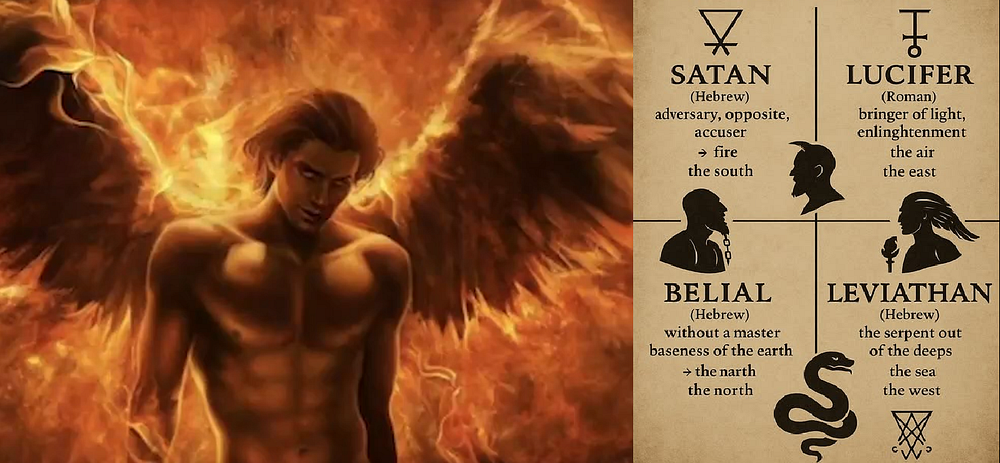
Scripture shows that pride did not begin in Eden — it was already at work in the unseen realm. Isaiah 14:12–15 and Ezekiel 28:12–19 describe a proud, exalted being who sought a throne that belongs only to God. The language portrays an audacious inward resolve: “I will ascend… I will exalt my throne… I will be like the Most High.” Pride, at its core, is the angelic creature refusing creatureliness. It is the desire to rise above God’s appointed order, to reject headship, and to become self-ruled. Because of this rebellion, God cast Lucifer down, and Scripture indicates that a vast company of angels followed that fall (cf. Revelation 12:4, 9). The first “sin” was therefore not primarily an action but a posture — a heart that would not submit.
That same poison reappears in the garden, but now it is injected into human life. The serpent did not merely tempt Eve with fruit; he tempted her with independence — the promise of being “like God,” determining good and evil on her own terms (Genesis 3:1–6). Eve did not respect the order of creation and headship in the family; and did not yeilded to her husband Adam to make the final call with fruit. This is why pride is so deadly: it persuades the soul that surrender is weakness and autonomy is wisdom. In that moment, the enemy’s strategy also struck at God’s created order of headship and harmony. The temptation carried an undertone: “You don’t need to yield; you can decide.”
But the fall was not Eve’s failure alone. Adam was with her (Genesis 3:6), and he did not exercise faithful, protective leadership. He did not intervene, correct the deception, or uphold God’s command. In silence, he abdicated responsibility, and in participation, he joined the transgression. Pride can show itself both as grabbing authority and as refusing responsibility. One side says, “I will rule.” The other says, “I will not lead.” Both reject God’s design. The result was immediate: shame, hiding, blame, and broken fellowship — sin always fractures relationship (Genesis 3:7–13; Isaiah 59:2).
Pride disrupts submission to God, distorts relationships, and produces spiritual death. Yet the gospel brings hope: where pride brought a fall, Christ brings restoration. The first Adam grasped and fell; the last Adam humbled Himself and obeyed, even to death (cf. Romans 5:19; Philippians 2:8). And now, by union with Christ, the Spirit trains our hearts to reverse the ancient pattern — not independence, but trust; not self-exaltation, but humility; not rebellion, but joyful submission to God’s wise and life-giving order.
The New Covenant: God’s Answer to Sin’s Root
If sin is so deep — if pride is the root, and the world’s lusts are the battlefields — how does God save? The Old Covenant exposed sin through Commandments. The New Covenant conquers sin through Christ and the Spirit.
God promised a new work inside the human heart: “I will give you a new heart, and a new spirit I will put within you…” (Ezekiel 36:26–27). This is not superficial improvement. This is internal transformation.
What the New Covenant gives that the old could not:
- A finished atonement in Christ, not repeated sacrifices.
- A cleansed conscience, not ongoing guilt.
- A new nature, not merely external regulation.
- The indwelling Holy Spirit, not only outward commandments.
- Union with Christ, not only instruction about God.
Under the New Covenant, the Christian life is not “try harder.” It is “live from Christ.” It is not self-powered morality; it is Spirit-empowered holiness.
The Cross: The Death of Pride
If pride is the root of sin, then God must deal with pride at the root level. That is exactly what He does at the cross.
At the cross, we learn two humbling truths:
- My sin is worse than I admitted (it required the death of the Son of God).
- God’s love is greater than I imagined (He willingly gave His Son for me).
Nothing kills pride like standing at Calvary.
The cross says to human boasting: “You contribute nothing to your justification.”
The cross says to human self-glory: “Only God saves.”
The cross says to the ego: “You are not the hero — Christ is.”
And the resurrection adds furthur: sin’s power is broken, and a new life is available. We don’t only receive pardon; we receive power to change.
Christ: The Opposite of Pride
Pride says, “I will ascend.”
Christ says, “I will descend.”
Philippians reveals the posture of Jesus: He humbled Himself and became obedient (Philippians 2:5–8). This is not just a historical detail; it is a spiritual pattern. Pride was the poison; humility is the cure. And the New Covenant does not merely command humility; it gives Christ, and Christ forms humility in us.
If pride is taking credit for what God has done, then humility is agreeing: “Everything I have, I received.” That is the point you drew from 1 Corinthians 4:7: “What do you have that you did not receive?” If it is received, boasting collapses.
A humble Christian is not someone who thinks they are worthless; it is someone who is no longer obsessed with self. Humility is freedom from self-worship.
How Do We Uproot Pride Practically?
Pride is stubborn. It can hide under religious clothing. It can preach sermons and still crave applause. So uprooting pride requires the power of the Holy Spirit.
Here are several practices that truly cut at pride’s roots:
Receive your identity from Christ, not reputation: Pride is obsessed with image. But in Christ, you are already fully known and fully loved. You no longer need to build a false self to survive. When your identity rests in Christ, you can accept correction without collapsing, because your worth is not being negotiated in every conversation.
Practice quick repentance: The proud heart delays repentance because it hates being wrong. But repentance is not humiliation; it is healing. Under the New Covenant, confession does not lead to condemnation; it leads to cleansing and restoration.
Learn to rejoice in others: Envy dies when love grows. Rejoicing in another person’s blessing is a direct assault on pride’s competitive spirit. It is saying, “God is good, and His goodness does not threaten me.”
Forgive as one forgiven: When you forgive, you are not denying the wrong — you are refusing to be ruled by it. You are choosing Christ’s way over pride’s demand for control.
Tell the truth: Deceit is pride protecting image. Truth-telling is humility walking in light. When you speak plainly, confess honestly, and refuse manipulation, you are dethroning self.
Serve in secret: One of the strongest pride-killers is hidden obedience — doing good when no one can applaud you. It trains the soul to seek God’s pleasure over human praise.
Stay near the cross daily: Pride grows when grace becomes background noise. But when the cross remains central, boasting stays crucified.
The Scripture promise is not that you will never feel temptation again. The promise is that sin will no longer be your master, and Christ will not abandon you in the battle.
Pride says, “I can fix myself.”
Grace says, “Come to Me.”
Pride says, “I will earn acceptance.”
Grace says, “It is finished.”
Pride says, “Protect your image.”
Grace says, “Walk in the light.”
Pride says, “Take credit.”
Grace says, “Give thanks.”
Conclusion
Sin is missing the mark, but the “mark” is not merely perfect behavior. The mark is God’s glory — and God’s glory is most clearly revealed in Jesus Christ. So the way forward is not simply “stop being proud.” The way forward is:
behold Christ, receive grace, walk by the Spirit, and keep returning to the cross.
And when pride whispers, “You are above correction,” answer with 1 Corinthians 4:7:
“What do I have that I did not receive?”
When pride whispers, “Defend yourself,” answer with the cross:
“Christ is my righteousness.”
When pride whispers, “You deserve more,” answer with worship:
“God has been better to me than I deserve.”
A Prayer of Humility: Father, in the name of Jesus, we confess that pride has lived too comfortably in our hearts. We have wanted recognition more than obedience, reputation more than holiness, control more than surrender. Forgive us for missing the mark, for lawlessness, for rebellion, and for breaking fellowship with You.
Thank You for the New Covenant — sealed by the blood of Jesus — where You not only forgive sin, but transform the sinner. Holy Spirit, expose the hidden pride that resists correction, and replace it with the humility of Christ. Make us quick to repent, eager to forgive, joyful in others’ blessings, honest in our speech, and faithful in secret obedience. Let the cross be our daily boast, and Jesus be our daily mark.
We surrender again — spirit, soul, and body — to the Lordship of Christ. Amen.