
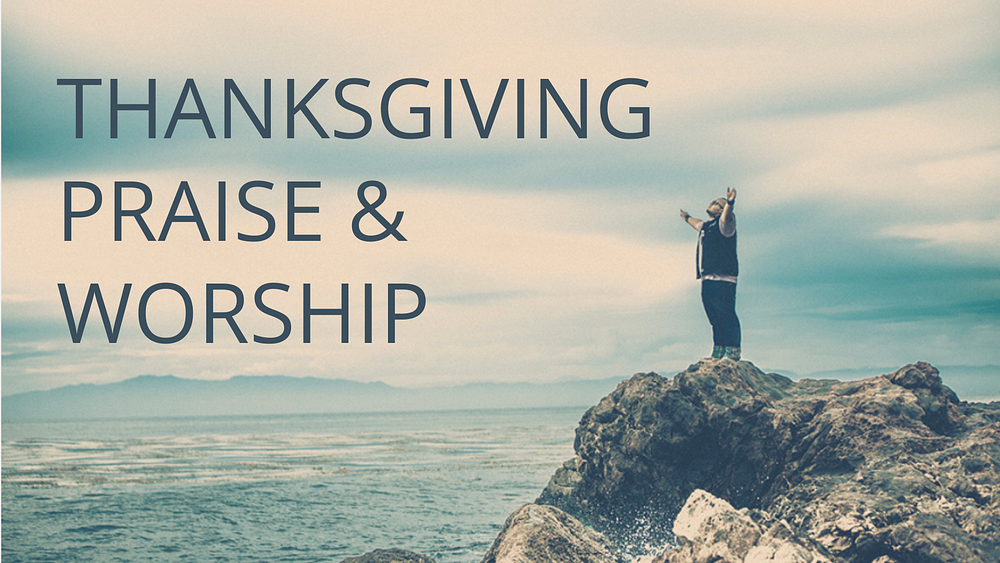
In Christ, the New Covenant reshapes our approach to God. Through Jesus’ finished work, we have bold access to the Father (Hebrews 10:19–22), and by the Holy Spirit we become a royal priesthood offering spiritual sacrifices (1 Peter 2:5, 9). Within this new reality, believers often use three closely related words — thanksgiving, praise, and worship interchangebily; many time misquoting them. They overlap, but they are not identical. A helpful way to see them is:
- Thanksgiving focuses on what God has done — His gifts and works.
- Praise declares who God is and how He acts — His character and mighty deeds.
- Worship expresses what God is worth — our surrendered response of love, obedience, and adoration with our whole lives.
1) Thanksgiving: Gratitude for God’s Gifts and Grace
Thanksgiving is the believer’s Spirit-enabled response of gratitude for God’s saving grace in Christ and for His daily mercies. The New Testament term eucharistia (from which “Eucharist” comes) means “giving thanks,” signaling a posture that flows from union with Jesus rather than mere good manners. We don’t thank God to earn favor; we give thanks because grace has already been given.
What thanksgiving includes.
- Specific gratitude for salvation and daily providence — answered prayer, provision, protection, and people. The healed Samaritan leper models returning to give glory to God (Luke 17:15–18). Paul thanks God for churches and their faith (Romans 1:8) and for partners in the gospel (Philippians 1:3–5).
- Thanksgiving shapes prayer: before we ask for more, we remember grace already given (Philippians 4:6–7).
2) Praise: Declaring God’s Greatness and Works
Praise is our spoken or sung declaration that God is great — celebrating His attributes and His mighty acts, supremely displayed in Christ’s death and resurrection. In the New Covenant, praise is offered “through Jesus,” because our access and acceptance are in Christ; it is “the fruit of lips that acknowledge His name” (Hebrews 13:15).
What praise includes.
- Declaring God’s character: His holiness, mercy, power, wisdom, faithfulness, and love (Ephesians 1:3–6; Revelation 4:8, 11; 5:9–13).
- Celebrating the gospel: the cross, resurrection, ascension, and promised return (1 Corinthians 15:3–4; Revelation 5:9–10).
- Shouts, joy, and exultation that fit God’s greatness (Philippians 4:4; 1 Peter 1:8).
- Public proclamation: praise often spills outward as witness (Romans 15:9; 1 Peter 2:9).
3) Worship: Whole-Life Surrender to God’s Worth
Worship is a life laid down before God, because He is worthy. The New Testament uses words like proskyneō (to bow, to adore) and latreia (service rendered to God). In Christ, worship is total-life offering empowered by the Spirit: bodies, minds, schedules, relationships, resources — presented to God as “living sacrifices” (Romans 12:1). Jesus relocates worship from mere places and forms to a Person and a posture: “in spirit and truth” (John 4:23–24).
What worship includes.
- Surrender of the will: We echo Gethsemane — “Not my will, but yours” — by offering our daily decisions to the Lord, testing and approving what pleases Him (Luke 22:42; echoed in Romans 12:1–2).
- Obedience is the visible language of worship — treasuring Jesus’ words and walking in them by the Spirit (John 14:15; 1 John 5:3).
- Repentance and consecration: Worship includes repentance and consecration: confessing sin, receiving cleansing (1 John 1:9), and pursuing holiness in both body and spirit (2 Corinthians 7:1).
Practical Ways to Grow in Each
Growing in thanksgiving.
- End each day by naming few evidences of grace and turning them into prayer.
- In anxiety, practice Philippians 4:6–7: bring requests with thanksgiving.
- Tie gratitude to generosity so others “overflow in many thanksgivings to God” (2 Corinthians 9:12).
Growing in praise.
- Sing Scripture-rich songs regularly (Ephesians 5:19).
- In small groups, invite “one-line praises”: “God, You are ___.”
- Keep a “God’s attributes” list and rehearse them aloud when discouraged (Psalm language fulfilled in New Covenant praise: Hebrews 2:12; 13:15).
Growing in worship.
- Start mornings with Romans 12:1 — verbally present your body, schedule, relationships, and resources to God.
- Let Sunday truth become Monday obedience: ask, “What step of obedience expresses my worship today?” (John 14:15).
- Practice Acts 13:2 rhythms: set apart times to “minister to the Lord” with fasting and prayer, listening for His direction.
Worship (surrender):
- Present an area of life as a “living sacrifice” (Romans 12:1) — time, money, habits.
- Pair Sunday singing with weekday obedience (Hebrews 12:28; 13:16; John 14:15).
A Side-by-Side Snapshot
Primary focus
- Thanksgiving: God’s gifts and works to me/us (Colossians 3:17; 1 Thessalonians 5:18).
- Praise: God’s character and mighty acts in Himself and in history (Hebrews 13:15; 1 Peter 2:9).
- Worship: God’s worth — responded to by surrender and obedience (Romans 12:1; John 4:23–24).
Typical language
- Thanksgiving: “Thank You for…”
- Praise: “You are…” “Bless the Lord…”
- Worship: “I am Yours…” “Not my will…”
Expressions
- Thanksgiving: gratitude in prayer, testimony, generous giving (Philippians 4:6; 2 Corinthians 9:11–12).
- Praise: singing, speaking, shouting, declaring God’s greatness (Ephesians 5:19; Hebrews 2:12).
- Worship: yielding life, holiness, acts of service and mercy (Romans 12:1; Hebrews 13:16; James 1:27).
Common Confusions (and Gentle Corrections)
- “We did worship; now we’ll do the sermon.” In the New Covenant, the Word itself is worship when received with faith and obeyed (Romans 12:2; James 1:22). Songs and hymns are primarily expressions of praise and thanksgiving, even though they are grounded in the Word
- “Thanksgiving and praise are the same.” They overlap, but Scripture distinguishes them for our good (Psalm 100:4; Hebrews 13:15; 1 Thessalonians 5:18). Learn to be specific in thanksgiving and expansive in praise.
- “Worship is mostly emotional.” Worship is not emotion first but surrendered obedience (Romans 12:1; John 14:15). As focus precedes feeling, the outcome is holiness with the help of Holy Spirit.
A Closing Exhortation
Because of Jesus, you stand welcomed before the Father. Enter with thanksgiving — name His mercies, remember His cross, thank Him for every grace (1 Thessalonians 5:18; 2 Corinthians 9:15). Lift praise — declare His excellence, sing His greatness, boast in Christ (Hebrews 13:15; 1 Peter 2:9). Live worship — present your whole life, obey His Word, serve with love, and keep yourself in reverent awe (Romans 12:1; Hebrews 12:28–29). This is the New Covenant way: through Christ, by the Spirit, to the glory of the Father (Ephesians 2:18).
Thanksgiving says, “Thank You for Your gifts.”
Praise says, “You are great and all Your works are glorious.”
Worship says, “I am Yours — all I am, all I have, forever.”