
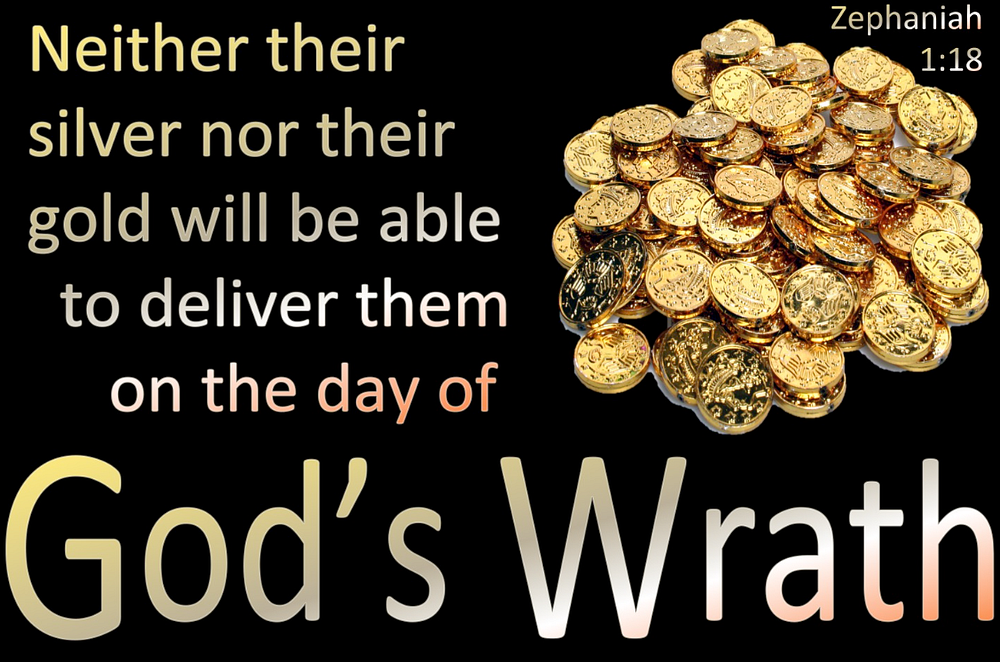
There is a spiritual deception that has quietly entered many hearts: the idea that more is always God’s blessing, and that the highest mark of divine favor is the size of one’s bank account, property portfolio, or worldly influence. But the New Covenant message of Jesus cuts across the grain of this world’s thinking. The gospel does not train believers to pursue earthly glory; it trains believers to die to the world and live unto God.
When Satan tempted Jesus, he revealed a deep truth about the present world system:
Matthew 4:8–9 — “Again, the devil took Him up on an exceedingly high mountain, and showed Him all the kingdoms of the world and their glory. And he said to Him, ‘All these things I will give You if You will fall down and worship me.’”
Satan offered kingdoms and splendor. Not merely bread. Not mere survival. He offered glory: power, status, prestige, visibility, control — the very things fallen human nature craves. And notice: Satan speaks as though these kingdoms are within his reach to distribute. Jesus did not pause to negotiate. Jesus did not attempt to use Satan’s offer “for ministry purposes.” He rejected it as worship-based corruption.
This aligns with what the apostles teach:
2 Corinthians 4:4 — “Satan… is the god of this world.”
1 John 5:19 — “The whole world lies under the sway of the wicked one.”
So the warning is not merely, “Don’t be greedy.” The warning is: the world system is under a dark influence, and its glory is often a baited hook. Many prayers that sound harmless are actually requests to be enthroned inside a system God is calling us to overcome.
The “World” Jesus Calls Us Out Of
When Scripture says “world,” it often means more than physical creation. It means the fallen order — values, desires, methods, and ambitions that operate without submission to God. John describes it clearly:
1 John 2:15–17 — “Do not love the world or the things in the world… For all that is in the world — the lust of the flesh, the lust of the eyes, and the pride of life — is not of the Father but is of the world. And the world is passing away, and the lust of it; but he who does the will of God abides forever.”
The world runs on:
- Lust of the flesh (pleasure as a god)
- Lust of the eyes (coveting what we see)
- Pride of life (status, achievement, self-exaltation)
Money, land, and worldly glory become dangerous not only because they are “things,” but because they are common vehicles for these lusts. They can feed self-sufficiency, self-importance, self-display, and spiritual sleep.
The Difference Between Daily Bread and Worldly Treasure
In Jesus’ own teaching:
Matthew 6:11 — “Give us this day our daily bread.”
Jesus taught us to pray for daily provision, not lifelong luxury. “Daily bread” trains the heart in dependence. It keeps the soul humble, watchful, and thankful.
And Jesus directly sets boundaries around what we pursue:
Matthew 6:31–33 — “Therefore do not worry, saying, ‘What shall we eat?’ or ‘What shall we drink?’ or ‘What shall we wear?’… For your heavenly Father knows that you need all these things. But seek first the kingdom of God and His righteousness, and all these things shall be added to you.”
Notice the contrast:
- The Gentiles seek (chase, obsess over) the basics
- The disciple seeks first the Kingdom
- The Father adds what is needed
So the disciple’s heart is trained to pray like this:
“Father, keep me faithful today. Feed me today. Cover me today. Shelter me today. And keep my heart from the deceitfulness of riches.”
This is the spirit of Agur’s prayer:
Proverbs 30:8–9 — “Give me neither poverty nor riches — feed me with the food allotted to me; lest I be full and deny You… or lest I be poor and steal.”
This is not poverty worship. This is purity worship. “Lord, don’t let my condition — either direction — become a trap that destroys my fear of You.”
Why Seeking Money and Land Can Become Spiritual Bondage
Money and land promise what only God can truly give: security, identity, comfort, significance. When the heart starts leaning on money, money becomes a rival god.
Matthew 6:24 — “No one can serve two masters… You cannot serve God and mammon.”
Mammon is not just cash — it is the spirit of trusting riches, the system of security through wealth. Jesus did not say, “You should not have money.” He said you cannot serve it. Many people serve it without ever admitting it. Their decisions, time, emotions, prayers, and fears revolve around it. Their “amen” is attached to their income.
And land, too, can become a spiritual trap when it becomes a “promise” outside God’s will — when it becomes the place where we believe our life finally becomes meaningful. But for the New Covenant believer, our promised inheritance is not ultimately earthly territory.
Hebrews 11:13–16 — The faithful “confessed that they were strangers and pilgrims on the earth… they desire a better, that is, a heavenly country.”
Believers are sojourners, not settlers of the age. The heart that clings tightly to earthly land often struggles to live like a pilgrim.
Jesus Warned That Riches Choke the Word
One of the most sobering teachings of Jesus is that riches can silence the Word inside a person — not through blatant rebellion, but through slow suffocation.
Mark 4:18–19 — “The cares of this world, the deceitfulness of riches, and the desires for other things… choke the word, and it becomes unfruitful.”
“The deceitfulness of riches” means riches lie. They promise rest, but deliver anxiety. They promise freedom, but create chains. They promise safety, but fail in the day of trouble. They promise identity, but hollow out the soul. And in the process, the Word that once burned in the heart becomes quieter.
The New Covenant Standard: Contentment and Godliness
The apostles do not command believers to pursue prosperity; they command believers to pursue contentment.
1 Timothy 6:6–10 — “Now godliness with contentment is great gain. For we brought nothing into this world, and it is certain we can carry nothing out. And having food and clothing, with these we shall be content… For the love of money is a root of all kinds of evil…”
Look at the apostolic boundary: food and clothing (and by wisdom, shelter). This matches your statement strongly: pray for basic needs, not for worldly excess.
Paul continues:
1 Timothy 6:17–19 — “Command those who are rich… not to be haughty, nor to trust in uncertain riches… but in the living God… Let them do good… ready to give…”
So Scripture acknowledges that some will have more, but it rebukes the two great dangers:
- Pride (“haughty”)
- Trust (“trust in uncertain riches”)
Riches become spiritually lethal when they become our confidence.
The Most Dangerous Prayer: “Make Me Somebody Here”
Many prayers are not simply “Lord provide.” They are:
- “Lord, make me admired.”
- “Lord, make my name great.”
- “Lord, enlarge my territory” (as a lifestyle goal).
- “Lord, make me untouchable.”
- “Lord, give me an empire.”
But Jesus repeatedly taught the opposite spirit:
Luke 9:23–24 — “If anyone desires to come after Me, let him deny himself, and take up his cross daily, and follow Me.”
The cross is not a decoration — it is the death of self-rule. The cross contradicts the prayer for worldly glory, because worldly glory feeds the very self that the cross crucifies.
Galatians 6:14 — “The world has been crucified to me, and I to the world.”
A crucified man is not negotiating with the world for status. A crucified man is free.
But Isn’t Work Good? Isn’t Providing for Family Right?
Yes. The New Covenant does not teach irresponsibility. It teaches right aim and right trust.
- Work is honorable:
2 Thessalonians 3:10 — “If anyone will not work, neither shall he eat.”
- Providing is responsible:
1 Timothy 5:8 — “If anyone does not provide for his own… he has denied the faith…”
So the issue is not whether we work, or whether we pay rent, or whether we manage resources wisely. The issue is: What are we seeking? What are we loving? What are we trusting? We can work hard and still keep a pilgrim heart. We can plan responsibly without praying for worldly glory.
A clean New Covenant posture sounds like this:
- “Lord, give me honest work today.”
- “Lord, provide what my family needs.”
- “Lord, keep me from greed.”
- “Lord, keep my heart simple.”
- “Lord, make me generous.”
- “Lord, do not let my soul bow to mammon.”
Living the “Simple Gospel” Lifestyle
A believer who embraces this message will begin to live differently:
- They measure success by obedience, not accumulation.
- They fear spiritual compromise more than financial loss.
- They refuse the “bow down” deals — shortcuts that cost worship.
- They pursue generosity over luxury.
- They choose quiet faithfulness over public glory.
- They keep their heart ready for eternity.
This is why Jesus tells us:
Luke 12:33–34 — “Sell what you have and give alms; provide yourselves money bags which do not grow old, a treasure in the heavens… For where your treasure is, there your heart will be also.”
Conclusing Exhortation
Beloved, the kingdoms of this world and their glory are passing away. Their shine is temporary. Their reward is shallow. Their worship is costly. Satan’s offer always includes a hidden invoice: “Bow down.”
But Jesus offers something infinitely better:
- A Kingdom that cannot be shaken (Hebrews 12:28)
- An inheritance that does not fade (1 Peter 1:4)
- Bread that truly satisfies (John 6:35)
- A treasure that moth and rust cannot touch (Matthew 6:20)
So let our prayer be pure and simple:
“Father, give me daily bread. Give me what I need to obey You today. Clothe me. Shelter me. Keep my heart from covetousness. Deliver me from the world’s glory. Make me content. Make me holy. Make me generous. And let me seek first Your Kingdom until I see You face to face.” Amen.