
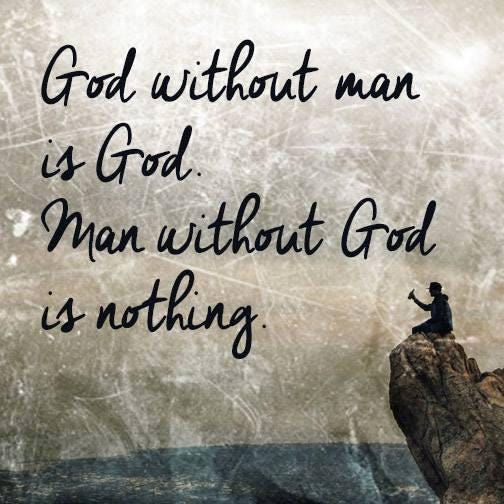
This generation proudly says, “My life, my rules,” “My body, my wish,” “No one can tell me how to live,” and “I do what feels right for me.” These slogans sound bold, independent, and liberating to the human heart, but in reality they reveal the old rebellion of Adam still alive in fallen humanity. At the center of this spirit is the enthronement of self and pride. Man no longer asks, “What does God desire?” but rather, “What do I desire?” He no longer seeks, “What is righteous?” but only, “What feels right for me?” Yet Scripture warns that feelings, instincts, and self-made wisdom are not safe guides for life. Proverbs 14:12 says, “There is a way that seems right to a man, but its end is the way of death.” The way may seem right. The path may appear reasonable. The choice may feel natural. But what seems right to fallen man is often in direct opposition to the will of God. Judges 21:25 says, “In those days there was no king in Israel; everyone did what was right in his own eyes.” That verse is not written as praise for freedom, but as a picture of moral collapse. When every man becomes his own authority, truth is lost, order is broken, and sin is normalized. The world calls this authenticity. God calls it rebellion. The world says, “Be true to yourself.” Christ says, “Deny yourself.” The world says, “Follow your heart.” The Lord says, “Follow Me.” It is the conflict between self-rule and God’s rule. It is the clash between the throne of the human ego and the throne of the Creator. Humanity has always wanted autonomy apart from God, ever since the serpent whispered the ancient temptation in Eden.
The message of self-ownership is deeply appealing to the flesh because it gives man permission to live without repentance. It allows the sinner to justify desire as identity and passion as truth. Romans 1:21–22 says, “Because, although they knew God, they did not glorify Him as God, nor were thankful, but became futile in their thoughts… Professing to be wise, they became fools.” Fallen man boasts in freedom while sinking into slavery of satan. He celebrates self-expression while being bound by sin. He imagines himself enlightened while Scripture declares him darkened in understanding. When man rejects God as Creator, he does not become more human; he becomes less than what he was made to be. He loses the moral clarity, spiritual purpose, and holy dignity that come only from walking under God’s authority. Romans 6:16 says, “Do you not know that to whom you present yourselves slaves to obey, you are that one’s slaves whom you obey, whether of sin leading to death, or of obedience leading to righteousness?” No man is truly autonomous. Every man serves a master. If he will not bow to God, he will bow to sin, lust, pride, self-will, fear, or deception. The New Covenant does not teach self-rule. It teaches surrender to Christ. It does not magnify personal will above all things. It calls man to repentance, obedience, and transformation by the Spirit.
When Man Rejects God, He Lives by Instinct Like Unreasoning Animals
The Word of God gives a severe but truthful description of those who reject divine understanding and live only by their corrupted instincts. Jude 1:10 says, “But these speak evil of whatever they do not know; and whatever they know naturally, like brute beasts, in these things they corrupt themselves.” This is not merely an insult. It is a spiritual diagnosis. When man refuses the light of God, he descends into the darkness of instinct-driven living. He begins to act not according to divine revelation, but according to appetite, impulse, and fleshly desire. That is why the modern slogans of self-rule often revolve around bodily desire, emotional impulse, and personal preference. “I do what feels right for me” is the creed of instinctive existence. It reduces human life to sensation and desire rather than holiness and truth. Scripture never teaches that man is merely a biological being guided by urges. Man was created in the image of God, called to know Him, obey Him, and reflect His character in the earth. But when that divine calling is rejected, man falls into a lower pattern of living. 2 Peter 2:12 says, “But these, like natural brute beasts made to be caught and destroyed, speak evil of the things they do not understand, and will utterly perish in their own corruption.” The danger is not that man becomes an animal in essence, but that he begins to live beneath the dignity of his God-given calling. He becomes governed by lower drives instead of heavenly truth. He becomes ruled by the flesh instead of led by the Spirit. He becomes reactive, sensual, and blind to eternal realities. This is why rebellion against God always produces moral degeneration. Once the fear of the Lord is removed, instinct becomes king.
Ecclesiastes 3:18 says, “I said in my heart concerning the condition of the sons of men, God tests them, that they may see that they themselves are like animals.” This verse humbles human pride. Man often boasts of intellect, achievement, culture, and progress, yet without God he remains spiritually blind and morally broken. God permits men to see the emptiness of life apart from Him so that they may recognize their need for divine mercy. Human beings may build cities, create systems, and speak sophisticated words, but when they reject the Creator, their inward life is no better than instinctive existence. They eat, desire, consume, compete, mate, fight, and die, yet never come to the knowledge of truth. Philippians 3:18–19 says of the enemies of the cross, “whose god is their belly, and whose glory is in their shame — who set their mind on earthly things.” Here is the tragedy of fallen man: he worships appetite. His desires become his god. His shame becomes his boast. His mind remains chained to earthly passions. This is why the New Covenant does not flatter humanity. It exposes sin in order to save man from it. The gospel does not affirm our fallen instincts; it crucifies the flesh and raises us into a new life.
The Folly of Self-Will: Returning Again and Again to Sin
The human heart, apart from grace, does not merely choose wrongly once; it repeats its rebellion again and again. Proverbs 26:11 says, “As a dog returns to his own vomit, so a fool repeats his folly.” Fallen humanity does not only commit sin; it returns to it. It revisits what once defiled it. It embraces what once wounded it. It goes back to what once brought shame, pain, and destruction. This is the cycle of self-will. Man says, “It is my choice,” yet he is not free. He keeps choosing the same poison. He calls it liberty, but it is compulsion. He calls it identity, but it is bondage. He calls it pleasure, but it leads to emptiness and judgment. 2 Peter 2:20–22 says, “For if, after they have escaped the pollutions of the world through the knowledge of the Lord and Savior Jesus Christ… the latter end is worse for them than the beginning… But it has happened to them according to the true proverb: ‘A dog returns to his own vomit.’” The soul that toys with sin will be hardened by sin. The conscience that excuses evil will be weakened over time. The heart that keeps resisting truth will become dull and unresponsive. This is why Scripture calls such a person a fool. A fool is not merely someone lacking intelligence. A fool is one who resists God’s wisdom and repeats the same destructive pattern while refusing correction. Self-rule cannot heal this condition. Positive thinking cannot break this cycle. Social approval cannot cleanse the conscience. Only Christ can deliver a person from the slavery of repeated folly.
Jeremiah 17:9 says, “The heart is deceitful above all things, and desperately wicked; who can know it?” The modern world says the heart is trustworthy, but God says the heart is deceitful. The world says to listen inward; God says the inward man is corrupted by sin unless renewed by grace. This is why building life upon feelings is dangerous. Feelings shift. Desires deceive. Impulses mislead. Fleshly instincts promise life but bring decay. Romans 7:18 says, “For I know that in me (that is, in my flesh) nothing good dwells.” The flesh cannot be improved into holiness. It must be crucified with Christ. Self-will is not the path to fullness; surrender is. Man’s greatest problem is not that society restrains him too much, but that sin rules him too deeply. He is not merely oppressed by external limits; he is corrupted by internal rebellion. Therefore, the New Covenant offers something far greater than moral advice. It offers a new heart, a new spirit, and a new power to walk in obedience. The gospel says you do not have to return to your vomit. You do not have to be ruled by old passions. You do not have to keep repeating your folly. In Christ there is deliverance. In the Spirit there is victory. In obedience there is life. Wisdom begins when man stops trusting himself and begins trusting God.
The Truth About the Human Body: Not “My Body, My Wish,” but God’s Temple
One of the strongest slogans of self-rule is, “My body, my wish.” But the New Covenant speaks very differently about the body. For the believer, the body is not a private possession to be used however one desires; it belongs to the Lord. 1 Corinthians 6:19–20 says, “Or do you not know that your body is the temple of the Holy Spirit who is in you… and you are not your own? For you were bought at a price; therefore glorify God in your body and in your spirit, which are God’s.” This passage directly overturns the spirit of autonomy. “You are not your own.” That is the truth. The redeemed life is not self-owned but Christ-owned. The believer does not belong to lust, culture, public opinion, or private preference. He belongs to Jesus Christ, who purchased him with His blood. The body therefore is not to be used as an instrument of rebellion, but as an instrument of righteousness. Romans 12:1 says, “Present your bodies a living sacrifice, holy, acceptable to God, which is your reasonable service.” A living sacrifice does not live for itself. It is offered to God. It is surrendered. It is yielded. It is consecrated. It is a vessel meant to serve the will of its Maker. When man says, “My body, my wish,” he assumes ownership that Scripture denies. He ignores the fact that God is the Creator, sustainer, and rightful authority over human life. Even the body itself is a gift from God, not an invention of the self. Therefore, no creature has moral independence from the One who formed him in the womb and gives him breath.
The New Covenant calls believers to honor God with their bodily life because redemption touches the whole person. 1 Corinthians 6:13 says, “Now the body is not for sexual immorality but for the Lord, and the Lord for the body.” This principle extends beyond one sin. The body is for the Lord. The hands are for the Lord’s work. The eyes are for holy sight. The mouth is for truth, praise, and grace. The feet are to walk in righteousness. The mind is to be renewed. The whole person belongs to God. Romans 6:12–13 says, “Therefore do not let sin reign in your mortal body… And do not present your members as instruments of unrighteousness to sin, but present yourselves to God.” Notice that sin seeks to reign in the body. It wants control. It wants expression. It wants the members of the body as its weapons. But grace calls the believer to another presentation: present yourself to God. The Christian life is not body-hatred, but body-consecration. It is not “my wish,” but “Your will.” The body under sin becomes an instrument of shame, but the body yielded to God becomes a vessel of worship. True freedom is having the body brought under the government of the Holy Spirit. The man who cannot say no to bodily desire is not free.
True Freedom Is Not Self-Expression but Submission to Christ
The world defines freedom as the absence of restraint. It imagines freedom means doing whatever one wants, becoming whatever one feels, and answering to no higher authority. But Scripture presents a radically different vision. John 8:34–36 says, “Whoever commits sin is a slave of sin… Therefore if the Son makes you free, you shall be free indeed.” According to Jesus, the sinner is not free. He is a slave. His desires may feel powerful, but they reveal his bondage rather than his liberty. He may reject moral boundaries, but he cannot escape the chains of sin. He may claim self-rule, but he remains under corruption. Freedom therefore is not the right to sin without interference. Freedom is deliverance from the dominion of sin through the Son of God. This means that self-expression can actually be a form of slavery when the self being expressed is fallen, proud, and unrenewed. The gospel does not call us to express the old self; it calls us to crucify it. Galatians 5:24 says, “And those who are Christ’s have crucified the flesh with its passions and desires.” That is not the language of modern culture, but it is the language of the kingdom. The Christian does not enthrone his passions. He nails them to the cross. He does not build identity around desire. He submits desire to Christ.
Matthew 16:24–25 says, “If anyone desires to come after Me, let him deny himself, and take up his cross, and follow Me. For whoever desires to save his life will lose it, but whoever loses his life for My sake will find it.” Here is the paradox of the gospel. The man who insists on owning his life loses it. The man who gives his life to Christ finds it. Self-denial is not self-destruction; it is the doorway to real life. Cross-bearing is not misery; it is discipleship. Following Jesus means that Christ, not self, becomes Lord. Galatians 2:20 says, “I have been crucified with Christ; it is no longer I who live, but Christ lives in me.” This is the heart of the New Covenant life. It is Christ in me. It is Christ over me. It is Christ through me. The believer’s decisions, body, mind, future, ambition, and desires are all brought under the loving lordship of Jesus. This is not oppression. This is restoration. The creature finally comes into alignment with the Creator. The sheep returns to the Shepherd. The son comes home to the Father.
The New Covenant Way: A New Heart That Delights to Do God’s Will
The New Covenant does not merely condemn self-rule; it offers a new inner life by the Spirit. God does not simply command obedience from a hard heart and leave man powerless. He promises inward transformation. Ezekiel 36:26–27 says, “I will give you a new heart and put a new spirit within you… and cause you to walk in My statutes.” This is glorious hope. The old heart loves autonomy, resists correction, and runs toward sin. The new heart is softened by grace, awakened to truth, and inclined toward God. The New Covenant is therefore not merely external religion. It is inward renewal. Hebrews 8:10 says, “I will put My laws in their mind and write them on their hearts; and I will be their God, and they shall be My people.” God’s will is no longer something merely heard from outside; it is written within by the Spirit. The believer begins to love what God loves and hate what God hates. He does not become sinless in this age, but he is no longer at peace with rebellion. He has a new desire to please the Lord. This is the great difference between the flesh and the Spirit. The flesh says, “I make my own decisions.” The Spirit says, “Teach me to do Your will.” The flesh says, “It is my choice.” The new heart says, “Not my will, but Yours be done.” The essence of salvation is not merely forgiveness from penalty, but transformation of life. Christ did not die only to excuse sinners, but to create a holy people for His name.
Philippians 2:13 says, “For it is God who works in you both to will and to do for His good pleasure.” Under the New Covenant, God works in the believer both at the level of desire and action. He reshapes the will. He purifies the motives. He strengthens obedience. Titus 2:11–12 says, “For the grace of God that brings salvation has appeared to all men, teaching us that, denying ungodliness and worldly lusts, we should live soberly, righteously, and godly in the present age.” Grace is not permission to live however we want. Grace teaches us to deny ungodliness. Grace trains us to say no to worldly lusts. Grace produces sober, righteous, and godly living now. The Christian therefore is not a person who merely adopts religious words while still living by personal instinct. He is a person being renewed day by day into the likeness of Christ. His language changes. His values change. His choices change. His relationship to the body changes. His understanding of freedom changes. He no longer says, “I belong to myself.” He says, “I belong to the Lord.” He no longer builds life around personal vibe, private desire, and individual autonomy. He seeks first the kingdom of God and His righteousness.
Conclusion: From Self-Rule to Surrendered Sonship
The human problem is not merely ignorance. It is rebellion. Man wants the privileges of being created by God without the responsibility of obeying God. He wants identity without surrender, freedom without holiness, desire without judgment, and life without lordship. But such a path ends in destruction. Proverbs 14:12 says, “There is a way that seems right to a man, but its end is the way of death.” Therefore the call of the gospel is to stop trusting your fallen instincts. Stop worshiping your desires. Stop calling rebellion freedom. Stop treating the body as self-owned and the heart as morally reliable. Return to the Creator. Bow to Christ. Let the Spirit renew you. Let God teach you what true life is.
Romans 8:13–14 says, “For if you live according to the flesh you will die; but if by the Spirit you put to death the deeds of the body, you will live. For as many as are led by the Spirit of God, these are sons of God.” Here is the final contrast. To live by the flesh is death. To be led by the Spirit is sonship. The animal-like life is ruled by instinct. The redeemed life is ruled by the Spirit. The fool returns to folly. The disciple walks in newness of life. The good news is that the Lord is merciful. He receives those who repent. He cleanses those who come. He transforms those who surrender. Therefore let this be the cry of every heart: Lord, deliver me from self-rule. Crucify my pride. Cleanse my desires. Teach me obedience. Make my body Your temple, my mind Your dwelling place, and my life a sacrifice for Your glory.